
Teaching children to notice their own thoughts helps them plan, monitor, and evaluate how they learn. This short guide shows simple ways to pause, ask clear questions, and build confident learners.
When we model quick reflection, children learn that thoughts are manageable steps, not random moments. Small prompts during homework or at bedtime give students tools to organize their time and set a purpose.
Using direct questions and short check-ins gives thinking help that improves problem solving and study habits. Over time, these habits make learning smoother and make children more aware of how they approach tasks.
Key Takeaways
- Simple questions guide students to notice their thoughts and choices.
- Short reflections build planning and self-monitoring skills.
- Regular prompts improve study time and task focus.
- Helping children see purpose boosts motivation and clarity.
- Teachers and parents can use quick routines to support thinking development.
Understanding the Basics of Metacognition for Kids
Knowing how we think gives children a clear tool to tackle school tasks and daily choices. The idea that we can know our own thoughts goes back to Spinoza in the 17th century. His work is an early example of the ability to know that one knows.
The modern term entered research in the 1970s and changed how scientists view learning. Today, metacognition and metacognitive thinking describe a student’s ability to plan, monitor, and adjust their approach.
Teaching simple metacognitive strategies helps children notice when attention drifts or when a problem needs a new way of thinking. Small prompts—like asking, “What is my plan?”—give an immediate idea to shift focus and save time.
To understand our thought is to begin to guide it.
- 1970s research made self-monitoring a key concept in learning.
- Simple checks help students break big problems into steps.
- These skills give children tools to handle tricky situations and stay on task.
Developmental Milestones in Early Childhood
Around age four, children begin noticing how they plan tasks and check their own work. This stage marks the start of metacognitive skills that help children become self-aware learners.
Young students first show simple awareness of thinking. They point out steps in a task and say when something feels easy or hard. These cues give adults a chance to teach short planning moves and quick checks.
Awareness of Thinking
Children gain ways to reflect on their experiences. They start to ask small questions like, “What should I do next?” This awareness helps them notice progress and order in tasks.
Planning and Monitoring
At this milestone, students learn to plan simple steps and monitor time and results. With practice, these skills let them organize actions and track progress toward a goal.
- Begin practicing short planning prompts during play or work.
- Give structured chances to monitor progress and adjust strategies.
- Celebrate small steps so children see that planning helps learning.
Common Challenges in Developing Metacognitive Skills
Many young learners hit roadblocks when they must change how they think about a task. Cognitive flexibility is a frequent challenge; children often struggle to shift thinking when new information appears.
Without solid metacognitive skills, students may lean on outside motivation. This dependence slows growth in independence and planning.
Overconfidence can also harm progress. When a child overestimates their ability, they skip planning and miss steps that help future academic success.

Monitoring learning takes time. Many children find it hard to pause and reflect during a task, which makes it easy to stick with ineffective approaches.
- Difficulty adapting to new information.
- Reliance on external motivation instead of self-drive.
- Problems with accurate self-assessment and planning.
- Emotional and attention barriers that block focus.
Teaching children to evaluate their own approach helps them move past stuck thinking.
Educators who offer clear strategies for self-regulation and steady support can improve students’ ability to manage time, attention, and motivation. Over time, these steps build resilience and better learning outcomes.
The Role of Self-Awareness and Self-Management
Self-awareness gives students a steady inner guide when they face choices at school and home. Noticing small feelings and plans helps children decide what to try next. This builds a simple habit of checking progress and shifting strategies.
The Inner Voice
The inner voice is a running commentary that helps students name their goals and notice when focus slips. Plato captured this idea:
When the mind is thinking, it is talking to itself.
Teaching students to listen to that voice strengthens metacognition and boosts their ability to manage motivation and emotions. When children learn to label a thought or feeling, they gain a way to calm down and pick a better response in tricky situations.
- The inner voice acts as a companion that guides choices in social and academic situations.
- Self-awareness helps children recognize thoughts and emotions and use metacognitive thinking.
- Reflecting on thought patterns moves students from reactive responses to deliberate self-management.
Practicing short prompts — like “What am I thinking?” — trains the process of thinking thinking. Over time, this skill deepens motivation and gives students a reliable way to plan and adjust their actions.
Modeling Metacognitive Thinking for Your Children
Verbalizing your plans and checks gives children a clear example of reflective thinking. Say simple lines like, “I’m checking my work to make sure I didn’t miss anything,” while you do a task.
When adults share their inner voice, children see that pausing is normal. This shows a healthy mindset and makes abstract metacognition concrete.
Model short metacognitive strategies during daily routines. Narrate a quick plan, notice a distraction, and name a fix. Keep each step brief and calm so the process is easy to copy.
Explaining your thoughts gives children a way to apply the same steps to their own learning.
- Make your thinking visible with short comments while working.
- Show how you use time and choices to adjust a plan.
- Point out when you change strategy to handle a hard problem.
- Repeat this approach so children gain confidence to try it themselves.
Using Reflective Questioning to Build Independence
A few reflective prompts can move a child from reacting to choosing a better path. Short, open questions give a clear way to pause and learn during everyday tasks.
Contextual Questions
Ask brief scene-based questions that tie thinking to action. Try: “What was I trying to do?” or “What happened next?”
These questions help children place events in order and see which steps led to success or a problem.
Fact-Based Inquiry
Use simple evidence prompts: “What do I know?” and “What is true right now?”
Fact-focused questions reduce emotion and guide clear problem solving. This helps students use metacognitive skills to check progress and adjust plans.
Goal-Oriented Reflection
Wrap up with goal questions: “What is my goal?” and “What will I do differently next time?”
Daniel Siegel notes that talking about stories and choices helps teens put events in perspective. The same idea works with children of any age.
- Open questions encourage metacognitive thinking and steady self-assessment.
- Fact-based inquiry breaks complex situations into simple steps.
- Goal reflection turns a moment of struggle into a plan and a next time strategy.
Using reflective questions helps students see they can change their approach when things do not go as planned.
Implementing the AGAIN Process for Problem Solving
Use a familiar acronym to make problem solving feel like a game rather than a guess. The AGAIN process—Assess, Gather, Analyze, Implement, Note—gives a clear order that helps children handle complex tasks.
Assess asks students to name the goal and spot the main challenge. This step brings purpose and draws attention to what matters.
Gather collects information and checks what tools or facts are available. Teachers can prompt short lists to save time and reduce overwhelm.
Analyze invites students to weigh options and match strategies to their strengths. As Howard Gardner notes, top learners identify their strengths and weaknesses to improve next time.
- Implement tests a chosen approach in small steps.
- Note records outcome and progress so the student knows what to change.
Exceptional minds spot strengths and gaps, then use that knowledge to refine their work.
— Howard Gardner
Repeated use of AGAIN builds metacognitive strategies and steady thinking. Over time, students gain skills to monitor their progress and adjust their approach with confidence.
Creating a Supportive Environment for Growth
A warm space that values questions helps students treat mistakes as useful information. When adults invite short reflections, children practice thinking that leads to better choices. This environment nudges learners to try, fail, and try again without fear.
Fostering a Growth Mindset
Encourage a mindset that sees effort as progress. Use simple language that ties effort to results and praise strategies rather than fixed ability.
Thomas Sterner notes many people move through life without noticing their own thoughts. Pointing out thoughts and choices helps children become aware and choose better approaches.
- Create a safe routine where questions and small errors are welcomed.
- Share short stories about practice, effort, and new learning experiences.
- Give clear information and steady motivation so children can use metacognition and new strategies.
Help children notice their thinking so they can change it when needed.
Calming Techniques to Enhance Cognitive Focus
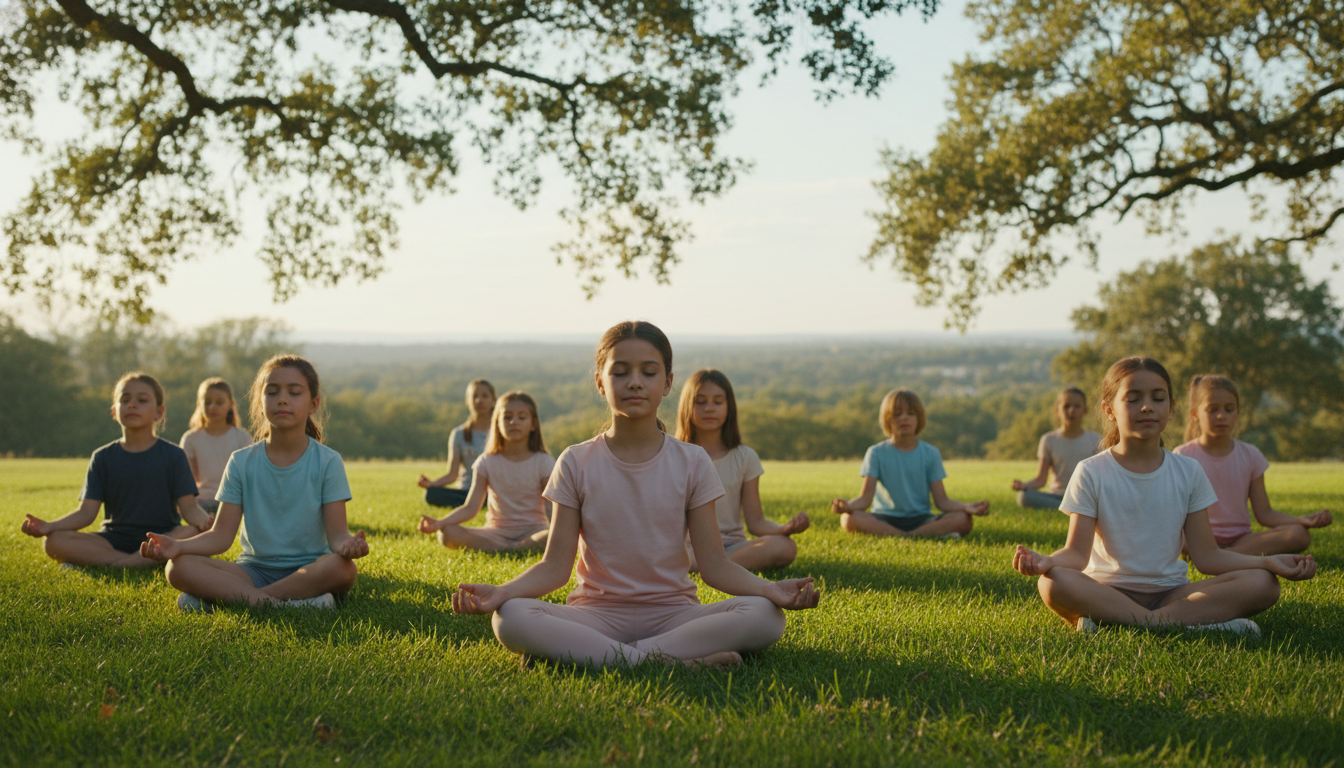
Simple breathing routines give students a clear way to pause and steady their attention. These techniques reduce stress and create space to plan the next step in a task.
Box Breathing Techniques
Box breathing uses a steady count: inhale, hold, exhale, hold. Each part is equal in length.
This method was used with Navy Seal recruits and helped improve passing rates. Teaching box breathing teaches children how to regulate emotions and regain focus.
Rainbow and Butterfly Breathing
Rainbow breathing adds a visual cue: imagine colors while taking slow breaths. Butterfly breathing uses short, gentle breaths, like a flutter.
These strategies give an easy example that helps kids center their thoughts and calm the body when a challenge arrives.
- Helps attention: breathing restores focus and reduces overwhelm.
- Builds ability: practicing gives students a quick way to pause and check their inner voice.
- Engage metacognitive thinking: steady breaths make it easier to notice emotions and plan next steps in less time.
Conclusion
,Small, regular pauses give students clear steps to check progress and adjust a plan. These short routines make metacognitive thinking practical and tie strategies to daily learning.
Mastering metacognitive skills is a long journey that builds independence. Use simple strategies and brief questions so learners can see purpose and revise their approach differently next time.
When adults teach these habits, students learn to use metacognitive skills to judge an outcome and pick the next move. A steady mindset and clear thinking help children stay motivated and improve performance.
In sum, practical thinking help and consistent practice prepare the next generation to meet challenges and learn more effectively each next time.
FAQ
What does “teaching kids to think about their thinking” mean?
It means helping children notice how they approach learning and solve problems. Caregivers and teachers guide kids to name their thoughts, set goals, and check progress. This builds skills that let them plan, monitor, and adjust strategies when tasks get hard.
How do I explain the basics of metacognitive thinking to a child?
Use simple language: ask what they plan to do, how they will check if it worked, and what they might try next. Short prompts like “What’s your plan?” or “How will you know you’re done?” teach the idea of thinking about thinking without overwhelming them.
When do children typically become aware of their own thinking?
Young children begin showing awareness in preschool—about ages 3 to 5—by naming feelings and choices. By early elementary years, many start planning and reflecting more clearly. Development varies, so support and practice matter more than exact age.
What are simple ways kids can practice planning and monitoring?
Encourage step-by-step plans for tasks, use checklists, and pause to ask questions like “Is this working?” or “What should I try next?” Short, regular check-ins during homework or chores build this habit over time.
What common challenges slow metacognitive skill development?
Kids may struggle with impulsivity, limited attention, low motivation, or anxiety. Tasks that feel too hard or too vague also block reflection. Breaking activities into smaller steps and offering clear feedback reduces these barriers.
How does self-awareness relate to managing behavior and learning?
Self-awareness helps kids recognize feelings, strengths, and limits. That recognition supports self-management—choosing strategies to calm down, stay focused, or retry a task. Teaching both together improves school and social outcomes.
How can I help a child hear and use their “inner voice” productively?
Model verbalizing thinking: talk through decisions and mistakes out loud. Then invite the child to try it. Provide sentence starters like “I will try…” or “That didn’t work; I will…” This scaffolds an internal dialogue that guides choices.
What are effective ways adults can model metacognitive thinking?
Think aloud while doing everyday tasks: plan a recipe, check a map, or fix a toy. Explain your goals, how you monitor progress, and how you change course. Children learn patterns of reflection by watching real examples.
How do reflective questions build independence?
Reflective prompts shift responsibility to the child. Questions about context, facts, and goals help them analyze situations and choose actions. Over time, children replace adult prompts with their own internal questions.
Can you give examples of contextual questions to ask a child?
Ask about the situation: “Where are you stuck?” or “What else is happening that affects this?” These help kids link thinking to the environment and pick appropriate strategies.
What are fact-based inquiry prompts parents can use?
Use prompts that focus on evidence: “What do you know?” “What information is missing?” or “What steps did you try?” These build accurate self-assessment and better planning.
How do I encourage goal-oriented reflection after a task?
Ask short post-task questions: “Did you meet your goal?” “What worked?” and “What would you do differently next time?” Keep answers brief and specific to reinforce learning cycles.
What is the AGAIN process for problem solving and how can kids use it?
AGAIN is a simple stepwise routine: Ask what’s wrong, Generate possible solutions, Assess the best option, Implement it, and Note results. Teach each step with examples and practice so children can apply it independently.
How can I create a home environment that supports metacognitive growth?
Offer predictable routines, quiet work spaces, and tools like timers or checklists. Praise effort and strategies rather than just results. Encourage reflection after tasks and model calm problem-solving.
What practical ways help foster a growth mindset in children?
Emphasize effort, describe strategies that led to improvement, and celebrate setbacks as learning chances. Use language like “You improved because you kept trying that strategy” to link effort with progress.
Which calming techniques improve focus before learning or problem solving?
Short, guided breathing and grounding exercises reduce stress and sharpen attention. Simple routines done the same way each time help kids switch from emotion to task-focused thinking.
How does box breathing work with children?
Box breathing uses four equal steps: inhale, hold, exhale, hold—count to three or four for each. Practice together briefly before tasks to lower arousal and improve concentration.
What are rainbow and butterfly breathing and when should I use them?
Rainbow breathing adds a visual: trace a rainbow with slow breaths to bring calm. Butterfly breathing uses hands over the chest to mimic wing movements while breathing slowly. Both suit younger children and work well when emotions run high.