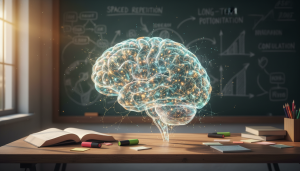


The ultimate goal of reading is to extract meaning from text. Tierney (1982) showed that developing readers need explicit instruction in comprehension strategies to reach that goal. This is not automatic; students learn best when adults guide the process.
Many parents assume that word decoding leads to understanding. Research and classroom practice disagree. Teachers and caregivers must teach strategies that connect words to ideas and background knowledge.
This short guide offers practical activities to help students build skills at home. You will find simple tasks that boost attention, prompt inferences, and improve critical thinking about texts.
When parents and teachers work together, students gain the awareness and tools they need to make sense of increasingly complex page content and classroom material.
Key Takeaways
- Meaning matters more than word recognition alone.
- Tierney (1982) supports explicit strategy instruction for young readers.
- Parents can use simple activities to build background knowledge and skills.
- Practice and guidance help students make inferences and answer questions.
- Teacher-family collaboration speeds development across subjects.
Understanding the Science of Reading Comprehension
The science is clear: fluent word recognition and strong language ability combine to create real understanding.
The Simple View of Reading, proposed by Philip Gough and William Tunmer (1986), frames understanding as the product of two parts: word recognition multiplied by language comprehension.
This model helps teachers diagnose why some students decode words accurately but still miss deeper ideas in a text. It shows that both skills must grow together for students to grasp meaning read on complex pages.
The Simple View of Reading
Gough and Tunmer’s equation makes instruction practical. If either component is weak, overall understanding drops.
Decoding vs. Language Comprehension
Decoding frees mental energy. When students stop struggling with words, they can focus on vocabulary, background knowledge, and making inferences.
Shanahan et al. (2010) define comprehension as the process of simultaneously extracting and constructing meaning through interaction with written language.
Shanahan et al., 2010
- Teachers use the model to target instruction.
- Research shows background knowledge and attention shape how readers connect clues in texts.
- Consistent practice builds the skills needed for classroom success.
Why Reading Comprehension Matters for Academic Success
When readers move beyond words to ideas, they gain power in every subject area. Strong understanding of text lets students follow complex procedures in science and solve multistep problems in math.
Targeted instruction speeds that shift. Programs such as Lexia Core5 Reading use adaptive data to help young learners move from learning to read to reading to learn. This transition matters for tests, classwork, and homework.
Research shows students who struggle with specialized vocabulary fall behind in social studies and science. Teachers who provide focused lessons and build background knowledge prevent those gaps.
- Making inferences and connecting ideas prepares students for critical questions.
- Consistent practice with engaging texts helps synthesize information from multiple sources.
- Explicit strategy instruction improves academic performance and motivation.
Developing this long-term skill supports higher education and career options. With steady teaching and good materials, readers gain awareness, attention, and the confidence to learn from complex texts.
The Role of Background Knowledge in Meaning Construction
A reader’s prior knowledge supplies the scaffolding that turns isolated facts into clear meaning.
Background knowledge acts as a mental framework that helps students connect new information to what they already know about the world. When teachers prompt students to recall related ideas, the same words in a text become easier to link into a coherent idea.
Research shows that readers with richer stores of knowledge make better inferences and draw logical conclusions. This skill matters most as texts grow more complex in science and social studies.

- Use brief pre-reading chats to activate prior knowledge and set a purpose.
- Share short multimedia or real-life examples so students can attach new ideas to experience.
- Ask focused questions that prompt links between clues in the text and what the reader already knows.
By teaching students to relate new ideas to their own experiences, teachers build lasting skills for understanding. This awareness makes the process of constructing meaning faster and more reliable, and it empowers students to take control of their own learning.
Essential Strategies for Before You Start Reading
Before students open a page, a few short steps can set the stage for deeper understanding. These pre-reading moves prepare minds to link new information to what they already know.
Activating Prior Knowledge
Quick previews help readers recall related ideas. Ask a student to name what they already know about the topic for one minute.
This primes background knowledge and makes inferences easier as they progress through the text.
Learning Key Vocabulary
Introduce 4–6 essential words before the main passage. Teach simple definitions and use each word in a short sentence.
When students understand key words, they anticipate main ideas and follow structure more smoothly.
Making Predictions
Have students scan the title, headings, or images and make one or two predictions. Encourage them to set a reading goal.
Predictions give readers a purpose and boost attention. Teachers who model this instruction find students answer questions more accurately and retain more information.
- Previewing activates background knowledge.
- Vocabulary work reduces word-level stumbling.
- Predictions focus thinking and guide monitoring of understanding.
Active Techniques to Use During the Reading Process
What students do inside a text determines how well they hold and use information later.
While students read, encourage active moves: ask focused questions, create mental images, and pause to summarize short chunks. Pressley (1977) found that readers who visualize details recall main ideas much better.
Teachers should model thinking aloud to show how to make inferences from clues. Use short prompts like “What does this suggest?” or “What might happen next?” to guide attention.
Teach fix-up strategies for when meaning breaks down. Students can slow down, reread a sentence, or look back for a tricky word. These steps keep the process moving and protect understanding.
- Stop every few paragraphs and have students summarize one sentence in their own words.
- Ask two quick questions to focus on important ideas and supporting details.
- Practice visualizing scenes to boost recall and link new knowledge to what they already know.
Consistent use of these during-reading strategies builds lasting skills so readers can move beyond decoding and learn from any academic text.
Post-Reading Activities to Reinforce Understanding
After the last page is closed, targeted activities help students lock in key ideas.
Summarizing and Retelling
First, ask readers to retell the story aloud. Oral retelling builds memory and vocabulary before students try a written summary.
Next, guide students to write a short summary that names the main idea and two supporting details. This practice links words to meaning and strengthens skills for classroom work.
- Use focused questions to check what students recall and where they struggled.
- Ask about the author’s purpose to promote critical thinking about the text.
- Have students compare their summary with a partner to gain new perspectives.
At home, try a quick three-step routine: retell, answer two questions, and write one takeaway. Consistent use of these activities helps students reflect on information, evaluate their own thinking, and build lasting learning habits.
Leveraging Text Structures to Organize Information
Recognizing how a passage is built helps students sort facts and spot key relationships.
Teach common text structures—cause-and-effect, compare-and-contrast, sequence, problem/solution, and description. These patterns give readers a predictable frame for locating the main idea and supporting details.
Use direct instruction to model how to identify signal words and paragraph cues. Short lessons that point out headings, lead sentences, and transition words make the structure obvious.
Introduce simple graphic organizers so students can visualize information flow. Venn diagrams, cause-effect charts, and sequence boxes help map words to meaning.
- Show how structure guides question answering and targeted note-taking.
- Practice with science reports, news articles, and short stories to build flexible skills.
- Give short home assignments that ask students to label structure and list two supports for the main idea.
With steady practice, students become faster at extracting information and more confident across subjects. These strategies move readers beyond decoding and toward deeper learning and lasting understanding.
Common Question Types to Deepen Critical Thinking
Asking the right kinds of questions turns a simple text into a tool for critical thinking.
Start with literal prompts that ask students to find facts straight from the page. These build a firm base and train readers to locate evidence.
Move to inferential questions that push students to combine clues and background knowledge. These items help readers draw logical conclusions and explain why an idea fits the text.
Use evaluative prompts to teach judgment. Ask students whether an author’s claim is fair, supported, or biased. Short-answer tasks work well here; they force concise, evidence-based responses.
Include vocabulary checks that let students confirm the meaning of key words in context. That practice links word-level work to larger ideas in the passage.
- Ask for the main idea and two supports to teach analysis.
- Rotate literal, inferential, and evaluative questions during instruction.
- Practice these at home to boost test readiness and lasting skills.
Conclusion
Helping students make sense of texts takes steady effort, clear instruction, and supportive adults. Good instruction and practical strategies shape how learners build meaning from each passage.
Focus on background knowledge and short, targeted tasks. These habits help students connect ideas and apply what they learn across subjects.
Use simple prompts and thoughtful questions to guide practice. Give fast feedback and model how to check for meaning as you go.
With consistent support at home and school, students grow more confident and independent. Try the activities in this guide to foster lasting skills and a love of reading.
Thank you for your commitment to helping students reach their full potential.
FAQ
What are the key components of the Simple View of Reading?
The Simple View breaks understanding into two parts: decoding (word recognition) and language comprehension (vocabulary, grammar, background knowledge). Both need to work together for a student to make meaning from text. Teachers often assess each part to target instruction and boost overall skill development.
How does background knowledge affect meaning construction?
Background knowledge gives readers context and helps them connect new information to what they already know. When students bring relevant facts or experiences to a passage, they make better inferences, remember ideas longer, and answer higher-order questions more accurately.
What should families do before a student starts a text to improve understanding?
Before reading, activate prior knowledge, teach essential vocabulary, and invite students to make predictions. Brief discussions, visual previews, or quick vocabulary games prepare the mind and increase attention to key ideas during the text.
Which active techniques help during the reading process?
Encourage annotation, asking questions, and monitoring for confusion. Strategies like thinking aloud, marking main ideas, and pausing to paraphrase support steady processing and deeper thinking while the student reads.
What post-reading activities strengthen recall and analysis?
Have students summarize or retell the main points, create graphic organizers, and answer text-based and inferential questions. These steps reinforce memory, check understanding, and practice using evidence to support ideas.
How can teachers use text structure to help students organize information?
Teach common structures—cause/effect, compare/contrast, problem/solution, sequence—and show signal words tied to each. When students recognize structure, they can map the author’s logic and retrieve details more efficiently.
What types of questions deepen critical thinking about a passage?
Use a mix of literal, inferential, and evaluative prompts. Literal items check facts; inferential prompts require making connections or predictions; evaluative questions ask for judgment or synthesis. This mix promotes analytical skills and thoughtful discussion.
How can vocabulary instruction be integrated without slowing fluency?
Teach high-impact words in brief, meaningful bursts tied to texts. Use visuals, examples, and multiple exposures in different contexts. Quick routines—word maps, short games, and sentence frames—build word knowledge while keeping pace with reading practice.
What role do predictions play in comprehension strategy instruction?
Predictions focus attention and activate relevant schema. Asking students to guess outcomes or the author’s purpose before and during reading increases engagement and provides checkpoints to revise understanding as new information appears.
How can parents support skill development at home without formal lessons?
Talk about everyday topics, ask open-ended questions, and connect media or outings to books. Brief shared activities—discussing a recipe, describing a museum visit, or comparing a TV episode to a book—build background knowledge and speaking skills that support classroom learning.
How do teachers assess whether a student needs help with decoding or language comprehension?
Educators use targeted measures: word reading and phonics tasks for decoding; oral language assessments and vocabulary checks for comprehension. Patterned results guide instruction—more phonics practice for decoding gaps, and language-rich activities when knowledge and vocabulary lag.
What classroom routines help sustain gains in understanding over time?
Daily brief routines—previewing texts, vocabulary warm-ups, and exit summaries—create consistent practice. Small-group instruction, paired discussions, and periodic review of background topics also support steady growth in skills and knowledge.