
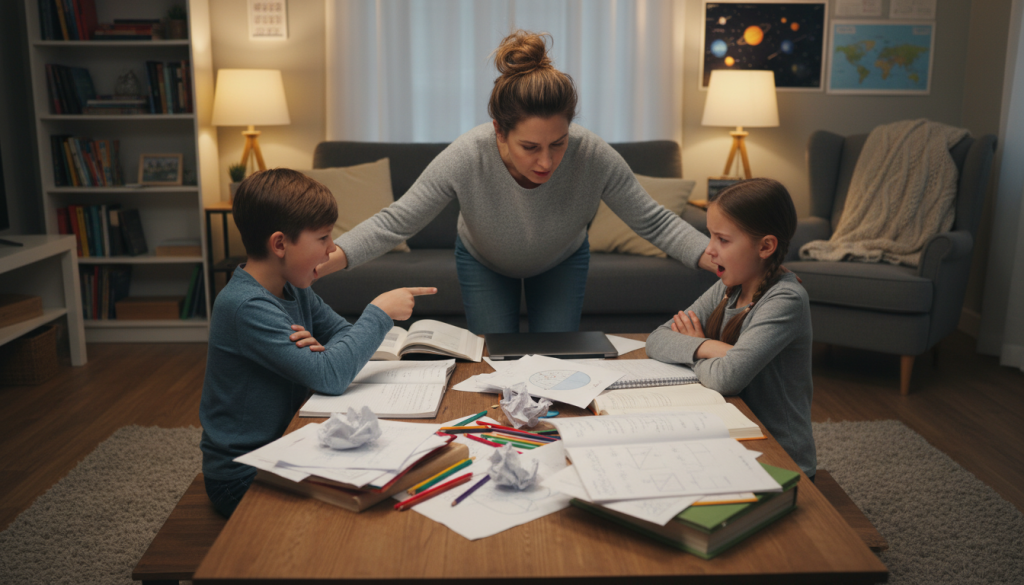

Julia used a simple mindset shift to break a long cycle with her 8-year-old daughter, Abby. What had been nightly conflict became calmer time together after she stopped trying to control every task.
The average family felt drained when school work took over evenings. Parents often stood ready to herd their kids back to the page, which made both sides defensive.
Stopping these struggles today means changing how you see your role. When you step back and encourage ownership, your child learns responsibility and the work gets done with less drama.
This is not about giving up. It is about guiding your child to take charge of a part of life that helps them grow. That shift protects family time and reduces stress, making evenings easier for everyone.
Key Takeaways
- Small mindset changes can stop nightly conflict.
- Encouragement helps a child take responsibility for school tasks.
- Parents who step back reduce stress for the whole family.
- Making the work part of life, not a battleground, improves relationships.
- Try one new approach this week to see fast results.
Understanding the Root of Homework Battles
Daily friction usually begins when parents try to manage tasks that belong to their child. That dynamic turns routine work into a power struggle over time.
Cynthia Tobias offers a practical view in her book, “The Way They Learn.” She urges parents to learn how each child thinks so support fits the child, not the parent.
Modern life makes focus harder. Screens, apps, and constant alerts create new distractions that compete with study. Over the years, these interruptions made many homes more tense at night.
Key reasons this starts:
- Different expectations between parents and kids about who owns the work.
- Distractions that cut into attention and delay progress.
- A pattern that builds over the school years unless parents shift their role.
“When parents treat children as teammates, kids feel more empowered to take charge of learning.”
— Adapted from The Way They Learn
Shifting Your Mindset from Manager to Teammate
What looks like help can quickly feel like control to a teen or young child. That shift in perception is the core reason nightly conflict grows into long-term tension.

The Danger of Nagging
Constant reminders and checking portals can sap motivation. Tyrell, a 17-year-old, told his parents that their frequent reminders and portal checks actually reduced his drive to finish his work.
When a parent sends the message that a child can’t manage, it can create anxiety and a negative identity. That feeling builds a wedge in the relationship over the years.
Empowering Your Child
Act like a teammate: ask open-ended questions and offer quiet support instead of orders. This helps kids take responsibility and practice adult skills.
- Stop routine portal checks and trust progress to the child.
- Use open questions to lower anxiety and invite solutions.
- Set clear expectations, then step back so your teen can own assignments.
“When parents drop the manager role, they create room for their child to grow and for the relationship to heal.”
Identifying Your Child’s Unique Learning Style
When you match how a child learns, tasks feel easier and resistance often fades. Start by observing what helps your child focus and finish an assignment. Small shifts in parenting can make the difference between a long struggle and homework done quickly.
Auditory Learners
Auditory kids learn by talking and hearing ideas. Let them explain problems out loud or read instructions to you.
- Tip: Ask questions while they speak so a teacher-style review helps them process.
- Tip: Use short verbal reminders and study aloud for brief time blocks.
Visual Learners
Visual learners need to see examples. A whiteboard, calendar, or charts can keep them on track.
- Tip: Post a visual reminder of tasks and minutes to work, then take breaks.
- Tip: Use color-coded notes to make each school task clear.
Kinesthetic Learners
Kinesthetic children struggle to sit still for more than 5–10 minutes. Movement helps them focus.
- Tip: Break tasks into short bursts and add quick physical breaks.
- Tip: Turn practice into games to match their personality and keep work engaging.
Note: With 97% of youth playing games and 91% of teens using media, parents should shape an environment that fits each style. Cynthia Tobias’ book supports finding the right way so responsibility and results improve over the years.
Creating an Environment for Academic Success
A calm study zone helps a child focus more in twenty minutes than a noisy room does in an hour. Minimize distractions like video games and social media during set study time so attention stays on the task.
Not every child needs the same setup. Some kids, like the author’s son Rob, work better with music and snacks. Other children need silence to get homework done.
- Minimize distractions: turn off games and pause notifications from media during study minutes.
- Agree the role: let your child propose a method and show it works before you step in.
- House rule: consider a family rule where everyone does quiet work while one child studies.
- Short, focused sessions: even 20 minutes in a dedicated spot can finish an assignment well.
Parenting here means being a supportive partner, not a manager. When parents back a clear rule and respect a child’s plan, the result is less stress and more homework done.
Recognizing When Struggles Indicate Deeper Issues
Sometimes nightly struggle points to something more than simple avoidance. When a child repeatedly stumbles on the same type of assignment, it may be a sign that parenting tactics alone won’t fix the problem.
- Corey Pollard highlights five indicators that suggest homework struggles may stem from a learning disability rather than laziness.
- If a teacher sees a clear gap between a child’s intelligence and their written work, that disconnect is a major red flag for further assessment.
- Struggling only with certain subjects, like math or spelling, can point to specific processing issues that need professional evaluation.
- Persistent trouble organizing or prioritizing assignments often signals the need for specialized strategies tied to a child’s learning style.
- Gathering family health and learning history gives professionals vital information when you seek an evaluation.
Next steps
If these signs appear, document examples and talk with your child’s teacher. A calm, evidence-based approach helps you get the right support so kids can regain confidence and parents can adjust their role effectively.
“Early recognition and the right assessment can change a child’s path in school and at home.”
Communicating Effectively to Reduce Resistance
A single honest question can change how your child sees your involvement in schoolwork. Try asking, “What’s helpful or hurtful about how I engage with you?” That bold question opens real conversation.
Build a culture of safety where your kids can speak freely about your parenting style. When children feel safe, they share what kind of help matches their personality and learning style.

The Connected Families Framework reminds parents that a child is loved regardless of grades. Saying that out loud can lower performance anxiety and shift the family message from pressure to support.
Stop constant reminders and step back from the manager role. That simple change sends a powerful message: you trust your child to take responsibility.
- Ask open questions: invite solutions instead of giving orders.
- Create safety: encourage honest feedback about your role.
- Set a rule: share how you will offer help and when you will wait.
“When parents listen without judgment, kids feel capable and relationships improve.”
Seeking Professional Support and Evaluation
Waiting for answers can cost months, so parents should know their options for faster support. Schools have up to 60 days to complete testing after a formal request. That delay means families sometimes face a six-month wait to get specialized help.
Consider private evaluations for vision, hearing, or learning style when speed matters. Private assessments often reveal issues that school testing misses. They give clear information you can share with teachers and specialists.
Bring a living history of your child’s development. Note patterns in behavior, work habits, and responses to support. This record helps professionals pinpoint needs and recommend targeted steps.
- Because schools may take 60 days, many parents find private evaluations faster for getting help.
- Act today if you suspect a learning disability to prevent long-term frustration and low self-esteem.
- When you meet a specialist, bring detailed history to ensure the most accurate advice.
- A team approach—parent, teacher, and specialist—gives the best chance of effective support.
- Every child deserves proper support; taking responsibility as a parent is a vital step.
“Early evaluation and a collaborative plan reduce stress and set a child on a clearer path to success.”
Conclusion
A small change in how you show up each evening, can reshape family routines fast.
Ending nightly conflicts means shifting from manager to teammate. Match support to your child’s learning style and create a clear, calm space for work. Use open, honest communication so your child feels trusted and empowered to take responsibility.
If struggles persist, seek professional evaluation to rule out learning or developmental issues. Above all, remember grades do not define your child. Keep connection and joy at the center of your approach, and you will see calmer nights and stronger relationships.
FAQ
Why do homework fights happen at home?
Conflicts often start when roles are unclear and expectations clash. Parents may try to manage every step while children want autonomy. Time pressure, tiredness after school, and anxiety about grades can make small issues escalate. Clear routines, consistent rules, and calm communication help reduce tension and make tasks feel manageable.
How can I change my approach from manager to teammate?
Shift to coaching by asking open questions, offering choices, and setting shared goals. Replace constant reminders with short check-ins and a collaborative plan. Let your child take responsibility for parts of the work while you stay available for guidance. This builds independence and improves cooperation.
What are signs my nagging is harming progress?
Nagging often leads to resistance, avoidance, and emotional shutdown. If your child argues frequently, delays starting work, or loses confidence, scale back prompts. Use brief, neutral reminders and praise effort to encourage consistent habits instead of control.
How do I empower my child to take responsibility?
Teach planning skills like breaking assignments into steps, using timers, and tracking progress on a simple calendar. Offer incentives tied to effort, not just results, and let them experience natural consequences when appropriate. Praise strategies and persistence to reinforce ownership.
How can I identify my child’s learning style?
Observe how they prefer to receive information: do they follow spoken directions, respond to images, or need hands-on activity? Try small experiments—recorded instructions, visual organizers, or movement-based tasks—and note which method increases focus and retention.
What helps auditory learners succeed?
Use read-alouds, recorded lessons, and verbal summaries. Encourage your child to explain ideas out loud or teach a concept to you. Short, clear spoken instructions and discussion-based review sessions work well for this style.
What strategies assist visual learners?
Use charts, color-coded notes, graphic organizers, and flashcards. Visual timelines and labeled diagrams make complex ideas easier to grasp. Keeping workspaces uncluttered and using highlighters helps maintain attention.
How do I support kinesthetic learners?
Incorporate movement into study: use manipulatives, role-play concepts, or break sessions into short active blocks. Let them stand while working or use a stress ball to channel excess energy. Practical, hands-on projects boost engagement for these children.
What environment best supports academic success at home?
Create a consistent, quiet space with good lighting, minimal distractions, and necessary supplies. Set a predictable schedule with breaks and healthy snacks. Family routines that value learning—like shared reading time—help children develop steady habits.
When should I worry that school struggles are deeper?
Seek evaluation if problems persist despite good routines, if frustration is extreme, or if your child avoids tasks consistently. Notice difficulties with reading, math, memory, or sustained attention. Early assessment by teachers, school psychologists, or pediatricians can identify learning differences.
What red flags suggest a learning disability?
Warning signs include chronic trouble decoding words, poor math reasoning, inconsistent performance, slow processing, and difficulty following multi-step instructions. Social withdrawal, anxiety, or acting out around assignments can also signal unmet needs.
How can I communicate with my child to reduce resistance?
Use calm, direct language and focus on feelings and solutions. Offer limited options, validate frustrations, and set short, achievable goals. Avoid lectures; instead, practice problem-solving together and celebrate small wins to build momentum.
When is professional support useful?
Consider tutors, school counselors, or educational therapists when progress stalls or when you need targeted strategies. For families with busy schedules, online tutoring can bring expert help into the week without adding a commute. For suspected learning disabilities, request a formal evaluation through the school or a clinical assessment to get tailored interventions.
How do I balance involvement without taking over?
Set boundaries that define your role: coach, not doer. Help plan and monitor but let your child complete the work. Use brief check-ins, limit the number of prompts, and gradually reduce support as skills improve to foster independence.
How can technology help without becoming a distraction?
Use apps for timers, task lists, and study tools that match your child’s learning style. Block distracting sites during work periods and choose educational platforms that encourage active learning. Clear screen rules and tech-free breaks maintain focus.
What if my teen resists more than my younger child?
Teens seek autonomy and respond better to respect and negotiation. Involve them in creating deadlines, link tasks to long-term goals, and discuss real consequences. Short, scheduled check-ins and fewer unsolicited comments reduce conflict and preserve trust.
How do I handle sudden increases in homework or tough assignments?
Break assignments into manageable pieces, prioritize tasks, and set a short-term plan. Communicate with teachers about workload and ask for clarification when needed. Use study groups or after-school programs for extra support when content becomes challenging.