
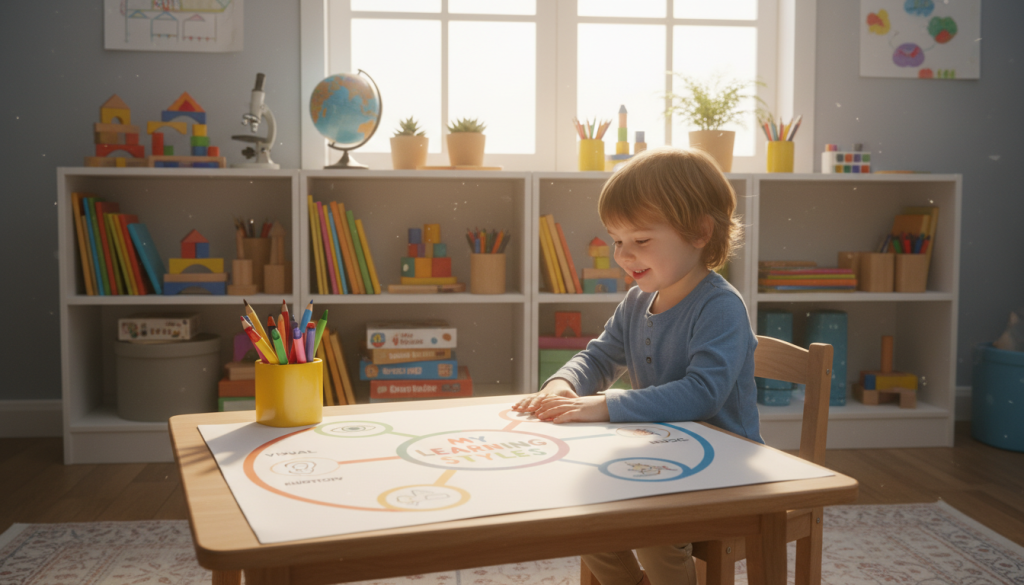

Every child has a unique way of taking in new information. Noticing that pattern can make a big difference in school results and confidence.
When homework feels hard, it is often because the assigned methods miss a child’s natural approach. By watching how your child responds to tasks, you can match study habits and classroom tasks to what suits them best.
This short guide shows how to spot the specific form of engagement that helps your child. It highlights why a one-size-fits-all path in education leaves many students behind.
With simple observations and targeted strategies, parents can help learners turn daily work into useful practice instead of a fight. Expect practical tips ahead to change homework into a clearer, more effective routine.
Key Takeaways
- Recognize how your child prefers to absorb information to boost confidence and results.
- Many students struggle when homework uses mismatched methods.
- Spotting a child’s style helps design better study strategies at home.
- People retain knowledge in different forms; match tasks to those types.
- Small changes in approach can transform homework from chore to progress.
Understanding the Concept of Learning Styles
People absorb facts and ideas in many distinct ways, and that affects how they do schoolwork. The idea of individualized learning styles rose to popularity in the 1970s as a way to name these differences. A literature review later cataloged over 70 models that try to explain those patterns.
Teachers often use these frameworks to adapt lessons. That helps make content more accessible to diverse learners. Yet every person keeps unique preferences, so no single model fits perfectly.
- Origins: the 1970s saw the first wide push to classify types of learners.
- Variation: research found dozens of competing models and terms.
- Practice: educators observe how students handle tasks to refine methods.
When teachers match tasks to a student’s preferred way of taking in information, homework becomes more useful.
The Primary VARK Model for Students
The VARK model, developed by Neil Fleming and Colleen Mills, divides how students take in information into four clear forms. This simple map helps parents and teachers match homework and class tasks to what helps a child learn best.
Visual
Visual learners prefer diagrams, charts, and maps to long text. Use color-coded notes, mind maps, and labeled images to help this learner retain facts.
Auditory
Auditory learners pick up ideas in lectures, discussions, and read-alouds. Group talk, stories, and recorded explanations let these students process content best.
Kinesthetic and Reading/Writing
Kinesthetic learning includes hands-on activities and experiments that let a student interact with material to remember it. Reading/writing learners focus on lists, notes, and text-based study.
- VARK highlights how people use multiple approaches; few rely on a single method.
- Teachers who mix techniques reach more students and improve homework success.
- Matching tasks to a child’s preferred form helps them learn better and feel more confident.
Exploring Alternative Learning Frameworks
Some models focus less on senses and more on how the mind organizes information. These frameworks help explain why standard tasks fail some students.
The Gregorc and Butler Model
Anthony Gregorc and Kathleen Butler mapped how people process information by combining perceptual strengths with ordering ability. The model sorts learners by whether they prefer concrete or abstract input and whether they arrange things sequentially or randomly.
The approach shows that a single study method does not fit all. Teachers who know a student’s style can vary activities and strategies to build skills faster.
- The model links perception and order to real classroom techniques.
- It explains why some learners favor step-by-step tasks while others work better with open, random tasks.
- Providing varied activities helps students of different types succeed.
Practical benefit: analyzing how individuals approach study helps teachers adapt methods so each student gets targeted support.
Cognitive and Emotional Factors in Education
Cognitive habits and emotional state often decide whether a task feels manageable or overwhelming. In 1974, Anthony Grasha and Sheryl Riechmann created the Grasha-Reichmann scale to map how a learner’s motivation and thought patterns shape classroom behavior.
The NASSP task force later listed 31 variables in the 1980s that tie motivation and cognition to real outcomes. These findings show emotion matters as much as memory when students tackle homework.

High motivation helps many learners adapt study routines and try new strategies. By contrast, low self-esteem or anxiety can limit a student’s flexibility and slow knowledge gains.
- Teachers who note motivation and mood can tailor teaching and assignments.
- Knowing cognitive needs lets educators support different learning types with clear goals.
- Small shifts in feedback and task design improve engagement for many individuals.
Understanding these cognitive and emotional drivers helps create an inclusive education plan. That support makes homework less about struggle and more about steady progress.
Practical Strategies for Homework Success
Creating a calm, organized space helps students focus and use their preferred study methods. Think about lighting, noise, and seating. A quiet corner suits some people; soft background sound helps others.
Creating an Ideal Study Environment
Set clear routines: consistent start times and short breaks make work predictable. Keep supplies nearby so tasks flow without interruptions.
Adjust the room for comfort. Let a child choose a lamp, a cushion, or a standing surface. Small changes cut frustration and lift motivation.
Adapting Assignments to Individual Needs
Offer different forms of assessment so each learner can show what they know. For example, let a student use peer tutoring, record oral summaries, or submit visual notes.
Mix activities and methods: rotate solo writing, group work, and hands-on tasks. This lets students try what helps them learn best and builds real skills.
When tasks match a student’s preferences, homework becomes practice rather than punishment.
- Teachers can vary prompts to match types of learners.
- Parents should encourage the study method that fits a child’s strengths.
- Small, practical shifts boost confidence and make education more effective.
Leveraging Artificial Intelligence for Personalized Learning
AI now helps teachers turn classroom tasks into tailored study paths for each student. Modern platforms use models like Felder and Silverman’s FSLSM to reshape content for different learners. This means text can become videos for visual learners and podcasts for auditory learners.
AI can also create hands-on activities and simulations that support kinesthetic learning. Teachers get tools that suggest tasks and generate materials tied to a student’s pace and preferences.
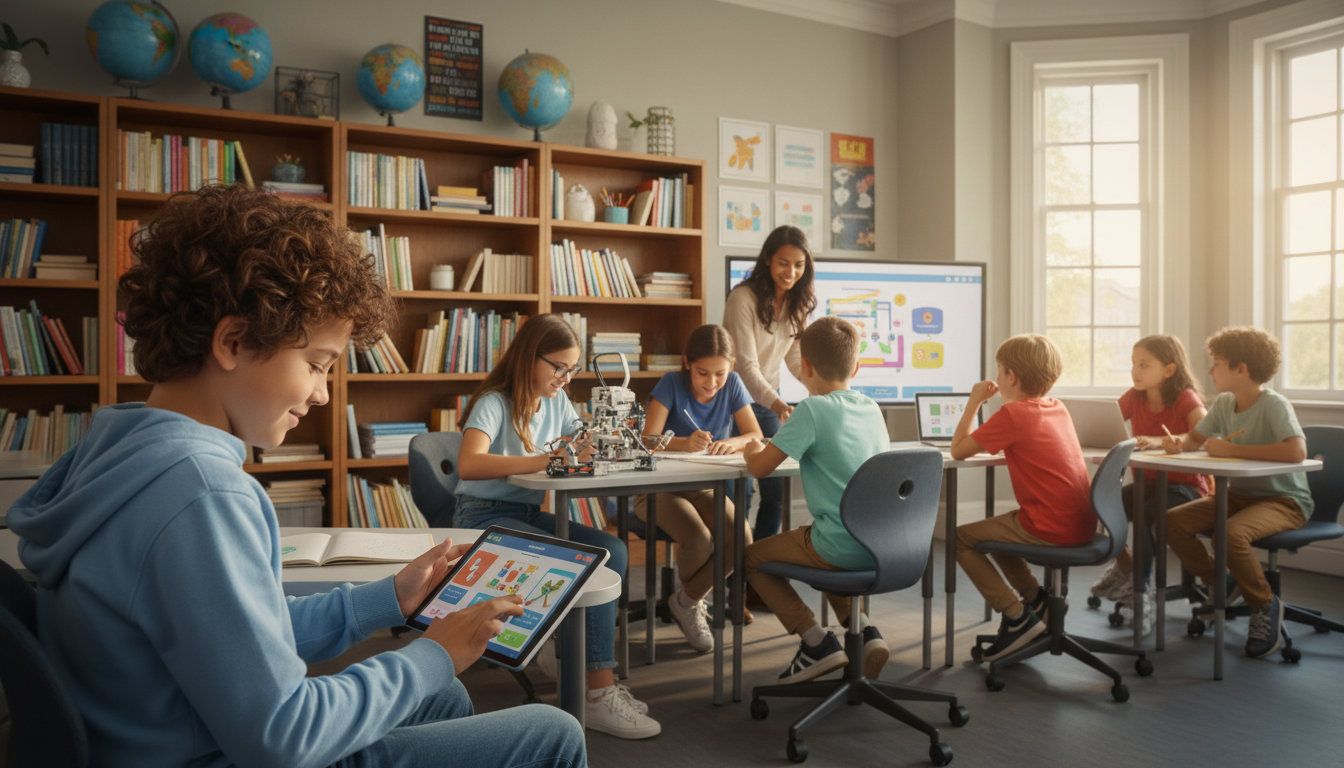
By analyzing performance data, systems deliver targeted feedback that helps students learn best. That feedback highlights skills to practice and offers new methods when a student hits a barrier.
“AI lets teachers adapt teaching methods to suit every individual person.”
- Convert text into video or audio to match the student’s preferred form of information.
- Produce interactive simulations and hands-on activities for applied practice.
- Create group forums where students discuss content and test ideas together.
In short: AI tools let teachers and parents mix techniques and activities so each student gains knowledge in the ways they absorb information best.
Conclusion
Observing how your child tackles tasks reveals what tools will help most.
Understanding your child’s approach to homework is the first step toward a calmer routine. Small changes in study methods make daily work clearer and more effective.
Teachers and parents should partner to test simple strategies that match each student’s needs. When instruction and content fit a child’s style, learners gain confidence and momentum.
Focus on how students process information and offer options rather than one path. That approach gives every child a fair chance to succeed in school and beyond.
In the end, respect for individual preferences helps foster lasting curiosity and a love of learning.
FAQ
What signs show my child prefers visual input?
Look for habits like using charts, diagrams, and color-coding to study, remembering faces and images more than spoken directions, and solving problems by sketching. Kids who pause to picture concepts or rely on written notes tend to favor visual methods. These behaviors often guide how homework is set up and completed.
How can I tell if my child learns better by listening?
Children who retain spoken explanations, follow verbal directions easily, and benefit from reading material out loud usually respond well to auditory approaches. They might enjoy discussions, podcasts, or being read to. Adjusting homework to include spoken summaries or oral reviews can help them perform better.
What are signs of a hands-on or movement-focused learner?
If a student prefers building models, experimenting, or using gestures while explaining ideas, they likely learn best through touch and action. These children often struggle with long sit-down sessions and do better with labs, role-play, or real-world tasks. Homework that includes projects or practical steps improves engagement.
Can a child’s preferred way of learning change over time?
Yes. Preferences shift with age, subject matter, and experience. A middle schooler who favored movement may develop stronger reading habits in high school. Growth, classroom formats, and new technologies all influence how a student processes information, so reassess periodically.
How reliable are simple questionnaires that claim to identify a student’s preferred method?
Short quizzes offer a snapshot but are not definitive. They can highlight tendencies but miss context like motivation or subject difficulty. Use them alongside observation, teacher feedback, and performance data to form a fuller picture.
What is the VARK approach and how does it help with homework?
VARK groups learners into visual, auditory, reading/writing, and kinesthetic categories. It helps parents and teachers match study tasks to a student’s strengths—for example, adding diagrams for visual learners or hands-on experiments for kinesthetic students—to boost retention and reduce frustration with assignments.
Are there other frameworks beyond VARK worth exploring?
Yes. Models like Gregorc and Butler offer alternative views that focus on how people perceive and order information. These frameworks can suggest different task structures and classroom arrangements, helping tailor homework and instruction more precisely to individual needs.
How do cognitive and emotional factors affect a child’s ability to complete homework?
Attention, working memory, stress, and self-confidence strongly influence task completion. A student might understand material well but struggle to start or finish work due to anxiety or poor executive functioning. Addressing these factors—through clear routines, breaks, and emotional support—often improves outcomes.
What practical changes can make homework time more effective at home?
Create a clutter-free, well-lit workspace, set a predictable routine, and break tasks into short, manageable steps. Match assignment format to the child’s strengths—use diagrams, recordings, or hands-on elements—and include short movement breaks to maintain focus.
How can teachers adapt assignments for different needs without creating too much extra work?
Offer tiered options: the same core goal but varied formats, such as a written report, a recorded summary, or a small project. Provide clear rubrics and time estimates. Small adjustments like optional visual aids or oral check-ins can yield big gains with minimal extra planning.
Can artificial intelligence personalize homework and study plans?
Yes. AI tools can analyze performance, suggest tailored practice, and adapt the presentation of material—using videos, quizzes, or simulations—based on individual progress. When combined with teacher oversight, these tools make personalized support scalable and efficient.
How should parents balance using technology with traditional methods?
Use tech to supplement—not replace—active engagement. Combine interactive apps or AI-driven drills with real-world practice, conversations about content, and offline projects. Monitor screen time and assess whether digital tools actually improve understanding and motivation.
When should I seek professional evaluation for persistent study struggles?
If a student consistently underperforms despite adjusted strategies, shows severe attention or memory issues, or displays large gaps between potential and achievement, consult school specialists or a licensed psychologist. Early evaluation can identify learning differences or emotional barriers and guide targeted support.


Build a culture of safety where your kids can speak freely about your parenting style. When children feel safe, they share what kind of help matches their personality and learning style.
Thanks for your comment. I am not sure it is only about safety. Your children should come to you when they need help or assistance. Furthermore, the world is oftentimes not safe and it should not be a limiting factor for their continued growth and education. Children who can succeed regardless of their conditions are more resilient and far more likely to succeed. That is the result we should all cultivate.