
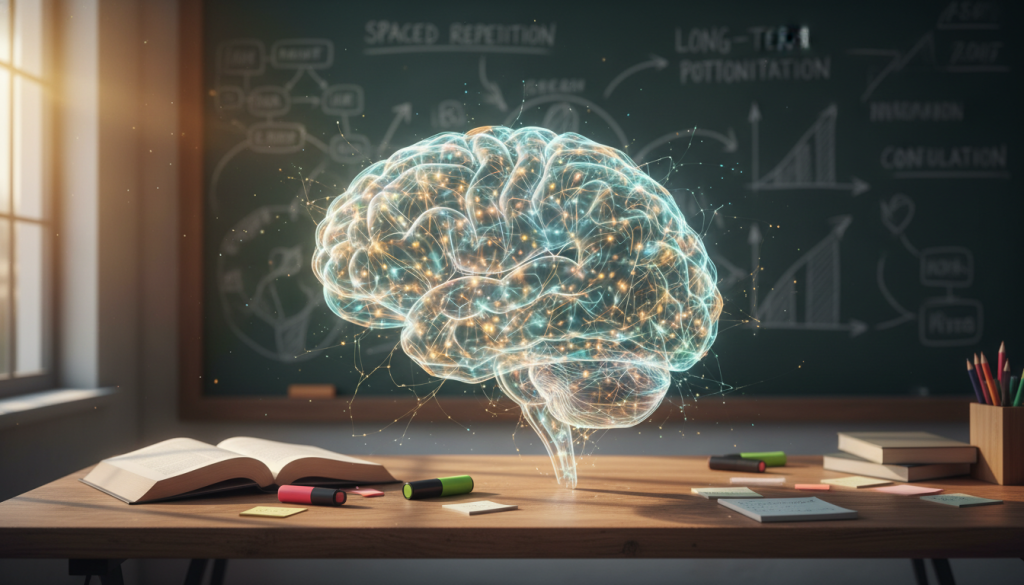

Understanding how the brain stores facts and skills helps you learn smarter, not harder. Spaced practice is an evidence-based method that boosts learning over weeks and months. This approach treats recall as a skill you can train.
Research shows long-term memory is flexible. With regular, planned review, your ability to hold complex ideas improves. Small, steady efforts often beat last-minute cramming.
In this guide, you will find clear steps to organize study, tweak daily habits, and use short exercises that protect cognitive health. These tactics support clearer thinking at work and home.
Key Takeaways
- Spaced practice strengthens storage and recall over time.
- Consistent, brief reviews beat intense, rare sessions.
- Daily habits and simple drills protect cognitive health.
- Plan reviews to match how the brain reconsolidates information.
- Small changes yield big gains in learning efficiency.
Understanding the Science of Memory and Retention
The brain uses a brief, active system to hold new information while you make sense of it. This short workspace helps you compare fresh ideas to what you already know.
Defining Working Memory
Working memory is the conscious place where the mind holds and manipulates items for a short time. It lets you follow a recipe, do mental math, or link a term to an example.
Why Keeping Information Matters
Capacity is limited, so overloaded working memory drops details before they transfer to long-term stores. Managing what content you focus on raises the odds that useful facts stick.
- Limit distractions to protect your active workspace.
- Chunk new information into small steps for faster encoding.
- Use brief reviews to move items from working memory into lasting use.
In short: knowing how your working system operates helps you organize study time and reduce needless effort. Better handling here boosts skill growth and daily efficiency.
The Role of Neuroplasticity in Brain Health
The human brain keeps changing across life, building new connections when we challenge it. Neuroplasticity is the process by which neural circuits rewire to support new skills and habits.
A 2023 study found that older adults who learned multiple real-world skills improved cognitive ability and functional independence. Recent 2024 research also showed that speaking more than one language can delay the onset of memory problems in people living with dementia.
- Neuroplasticity provides a pathway to combat memory loss and support healthy aging.
- Challenging activities, like language learning, reduce the risk of cognitive decline.
- Active learning helps adults remain independent and resilient against loss tied to dementia.
Prioritizing mental activity is a practical step in long-term health. Small, regular challenges strengthen neural pathways and help protect brain health across the lifespan.
Mastering Spaced Repetition for Long-Term Learning
Spaced repetition uses timed reviews to signal the brain that specific information matters. This method fights the Forgetting Curve, where most facts fade quickly without practice.
Applying the Rule of Intervals
Start with the 2, 7, 30 rule: check what you recall two days, seven days, and thirty days after first learning. These intervals boost recall by spacing retrieval attempts across time.
- Spaced repetition moves items from working memory into long-term storage more reliably than massed review.
- For example, learn a new software function, then practice it after two days, a week, and a month to deepen the skill.
- Research finds that active spacing beats simple repeats because it forces retrieval and strengthens neural traces.
- Consistent use of these strategies reduces working memory load and makes complex content easier to master.
Utilizing Mnemonic Devices to Simplify Information
Simple mnemonic tools let learners pack long lists into brief, memorable patterns. These techniques date back decades; classics like “ROY G. BIV” have helped students since the 1960s.
Why mnemonics work: they organize complex information into compact cues. That extra structure helps the brain store details with less effort.
- Mnemonics are proven ways to simplify complex information and make lists easier to recall.
- For example, acronyms or short rhymes turn names or technical terms into cues that help memory when under stress.
- Creating vivid images or a quirky phrase links new facts to the mind, so you can remember things faster.
- These tools lower the cognitive load of learning many things and make reviews more efficient.
Try this: pick one list, make an acronym or rhyme, then test recall after two days. Small habits like this make it far easier to remember things on demand.
The Power of Chunking Complex Data
When you split big chunks of content into smaller sets, your brain treats them as single, manageable units. This shift lowers strain on your working memory and speeds access to stored facts.
Chunking means grouping long strings into clear parts. A common example is turning a 10-digit phone number into three bites. That small change makes it far easier to recall information on demand.
Research from 2019 found that chunking reduces load on working memory and helps learners retrieve details more reliably. Using this approach turns many scattered bits into a few solid groups.
- Organize pieces information into natural groups for faster learning.
- Practice grouped items with brief reviews to strengthen recall information.
- Apply chunking for study lists, phone numbers, or steps in a workflow to save mental effort.
Mastering this habit helps students and professionals handle large volumes without losing track. Over time, the method creates shortcuts that free working capacity for higher-level thinking.
Constructing a Mind Palace for Spatial Recall
The mind palace, or method of loci, uses a familiar place to store complex facts. Visualize a home, route, or room and assign vivid images to spots along a path.
This method leverages the brain’s stronger link to locations so lists become scenes you can walk through. A 2021 review confirms the method of loci boosts spatial recall and overall memory performance.
Create a clear route, place one item per stop, then rehearse the walk to make recall automatic.
- Pick a single place you know well; use rooms as fixed stations.
- When trying remember a list, place each item in order along a walk.
- Spend brief time building the palace; champions use it for speeches and exams.
- A step-by-step path turns scattered facts into a permanent library to help memory later.
Joshua Foer’s talks detail practical steps for building these palaces. With small, regular practice you form a reliable structure for recall and reduce study time.
Active Recall Techniques for Better Encoding
C testing yourself without prompts strengthens recall. This practice forces the brain to rebuild the pathway each time, which helps move new information into long-term storage.
Using Flashcards
Flashcards are a direct example of active retrieval. Quizzing with a card forces your mind to supply an answer, not copy it. That effort reveals gaps quickly and makes study sessions efficient.
Verbalizing Information
Say facts out loud when trying remember a concept. Speaking engages extra brain regions and boosts learning more than silent review. A Japanese study found handwriting notes raised neural activity and improved later recall compared with typing.
- Active recall is one of the best ways to encode new information deeply.
- Avoid peeking at notes; let your mind struggle, then check answers.
- Add short self-tests to study lists to surface weak spots fast.
Practice retrieval, not passive review; the struggle yields stronger results.
Reducing Cognitive Load Through Organization
Simple organization can free mental space so you can focus on tougher problems. Use clear systems that move routine items off your mind and into a trusted place.
Keep a short, physical checklist for daily tasks. A written list reduces the effort your working memory uses to track little details. That freed capacity helps you learn and solve complex problems faster.
Relying on navigation tools every trip can weaken spatial skills. A 2020 study found heavy GPS use may lower your ability to form spatial memory and reduce cognitive flexibility. Try navigating manually sometimes to challenge the brain.
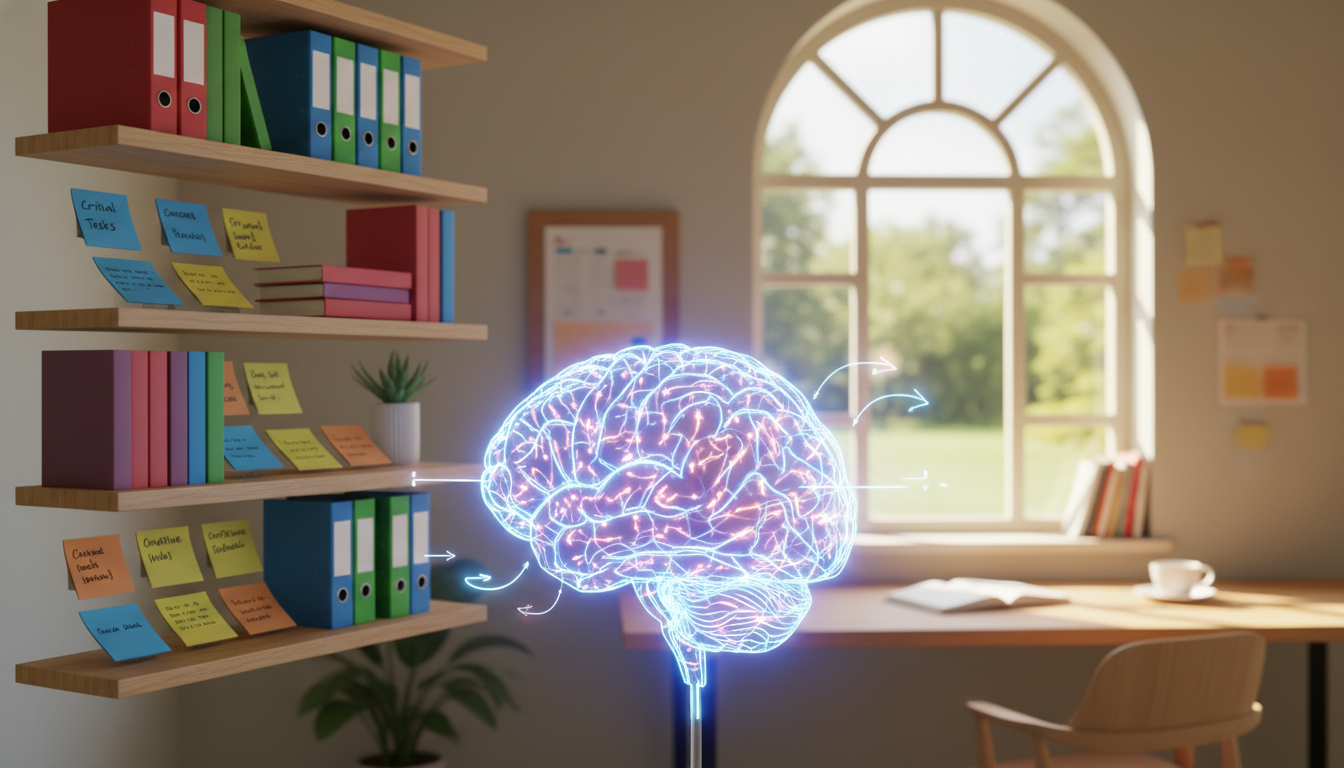
When you simplify tasks and clear your workspace, the mind can focus on what matters.
- Reduce clutter so your working memory is not overloaded.
- Use checklists to offload simple tasks and protect long-term encoding of information.
- Manage digital tools so the brain handles fewer distractions while tackling complex work.
The Impact of Sleep on Memory Consolidation
Quality sleep turns daytime learning into stable, usable knowledge. During rest, the brain clears metabolic waste and stabilizes neural links formed while awake. This process is called memory consolidation, and it happens mostly at night.
Short or irregular rest disrupts how new information is coordinated. Over time, poor habits can lead to problems with recall and raise the risk of memory loss. Aim for a steady schedule to keep the circadian clock aligned.
Avoiding Blue Light Exposure
Blue light from screens cuts melatonin production and delays sleep onset. Reduce exposure at least 30 minutes before bed to protect sleep quality.
- Sleep is the main time for consolidation; it stores what you learned during the day.
- Keep bedtime consistent each night; this helps the circadian rhythm and primes the brain for deep rest.
- Prioritize 7 to 10 hours of quality sleep to lower the chance of long-term memory loss.
Regular, full sleep is a simple, powerful step to protect learning and long-term brain health.
Nutritional Strategies for Cognitive Support
Choosing the right foods gives your brain fuel for learning and daily focus. Diets such as Mediterranean, DASH, and MIND show modest benefits by cutting inflammation and supporting overall health.
Eat fatty fish like salmon or sardines a few times weekly. Omega-3s in these foods improve blood flow and help maintain healthy neural connections.
Load meals with leafy greens, nuts, and berries. Recent research links these choices to better memory performance and lower risk of dementia in older adults.
Limit processed items and excess sugar. High salt and refined carbs can raise blood pressure and inflammation, which may affect memory and raise risk over time.
- Practical tips: follow MIND-style meals, add oily fish, and snack on nuts or berries.
- Small, steady dietary practices are one of the most sustainable ways to help memory and preserve cognitive health.
- These strategies support sleep, activity, and the working systems that process information each day.
Managing Stress to Protect Your Brain
Chronic stress raises cortisol, which weakens how the brain retrieves long-term facts. That hormone reduces focus on new tasks and makes it harder to access stored information.
A 2021 study found prolonged stress and depression can alter neural structure over time. These changes increase the risk of more serious decline, including higher chances of dementia later in life.
Practical steps lower harm and preserve mental clarity. Try short mindfulness sessions, deep breathing, or a brief walk when tension rises. These routines calm cortisol and help the mind refocus on working tasks.
- High cortisol can lead to memory loss and reduce workplace performance.
- Chronic pressure impairs retrieval of long-term facts and may change brain structure.
- Simple practices—mindfulness, breathing, regular breaks—protect brain health.
Reducing daily stress is one of the clearest ways to protect your ability to learn and recall over time.
Lifestyle Habits That Boost Mental Performance
Routine choices—how you move, meet people, and breathe—shape how well you learn. Small daily practices give the brain steady support for focus, working memory, and overall health.

Physical Activity Benefits
Regular physical activity improves blood flow to the brain, lowers blood pressure, and reduces the risk of cognitive decline. Short walks, light strength work, or gardening are practical ways improve brain health.
A 2024 study found walking in nature helps the brain rest better than urban walks. For adults, that simple change can boost working memory and reduce dementia risk over time.
Social Interaction
Social contact keeps people mentally active and builds skills needed to solve problems. Regular social interaction among older adults links to better same-day function and stronger long-term performance.
Meeting friends, joining groups, or volunteering are easy strategies that protect health and lower risk of decline.
Meditation Practices
Mindfulness and yoga are proven strategies to improve focus and help you remember things more clearly. Yoga, for example, enhances oxygen intake through diaphragmatic breathing and can raise working memory capacity.
Small, regular habits — sleep, exercise, and social connection — form a robust foundation for healthy aging.
- Engage in activity most days to boost blood flow and mood.
- Keep social routines to sharpen skills and reduce dementia risk.
- Practice short mindfulness sessions to calm stress and aid recall information.
Conclusion
Combining proven techniques creates a compact system for lasting recall.
Use spaced review, mind palaces, and active testing as core strategies. These methods work with neuroplasticity to lower the risk of skill loss and slow age-related loss.
Reduce cognitive load by organizing notes and limiting distractions. Prioritize sleep, good nutrition, and regular movement to cut the chance of further loss.
Small, steady steps build strong working habits that protect learning over time. If you commit to consistency, you can improve memory retention, fight decline, and keep performing at your best.
FAQ
What is spaced practice and why does it help long-term learning?
Spaced practice means reviewing material at increasing intervals instead of cramming. Spacing gives the brain time to consolidate information into durable stores, strengthens neural connections through repeated retrieval, and reduces forgetting. It boosts long-term recall and makes studying more efficient.
What does working mean in cognitive science?
Working refers to the short-term system that holds and manipulates small amounts of information for tasks like problem solving or following instructions. It has limited capacity, so breaking tasks into smaller parts and reducing distractions helps this system perform better.
Why does retention matter for learning and daily tasks?
Good retention saves time and reduces errors. Whether studying for exams, remembering instructions at work, or following a recipe at home, retaining information helps you act with confidence and lowers stress. It also supports skill mastery over months and years.
How does neuroplasticity support healthy thinking and recall?
Neuroplasticity is the brain’s ability to form and reorganize connections in response to experience. Practice, new learning, and consistent challenge prompt structural and functional changes that improve performance and help offset age-related decline.
How do I apply the rule of intervals for effective spaced repetition?
Start with short gaps after initial learning, then gradually increase intervals as recall improves — for example, review after one day, three days, a week, two weeks, and a month. Adjust based on how easily you retrieve the information.
What are mnemonic tools and when should I use them?
Mnemonic tools are techniques that turn complex facts into easy-to-retrieve cues, such as acronyms, rhymes, or vivid images. Use them for lists, sequences, dates, or vocabulary when direct understanding is hard to achieve quickly.
What is chunking and how can it simplify complex data?
Chunking groups individual pieces into meaningful units (like breaking a phone number into segments). It reduces load on short-term systems and makes larger sets easier to learn and recall.
How do I build a mind palace for spatial recall?
Pick a familiar place, assign vivid images to specific locations, and mentally walk through it to retrieve items. The spatial and visual cues anchor abstract details and improve retrieval speed.
What is active recall and why is it effective for encoding?
Active recall requires you to retrieve information without prompts, such as answering questions or doing practice tests. This effortful retrieval strengthens connections and reveals gaps more reliably than passive review.
How should I use flashcards for best results?
Make one concept per card, practice until you can retrieve answers quickly, and space reviews based on difficulty. Use both written and verbal prompts to reinforce different retrieval routes.
How does saying information out loud help learning?
Verbalizing engages auditory and motor circuits along with visual ones, creating multiple retrieval cues. Explaining concepts aloud also clarifies understanding and highlights weak spots.
How can I reduce cognitive load when organizing study or work?
Break tasks into small steps, use lists and labels, remove distractions, and maintain a consistent layout for materials. External tools like calendars and note apps free mental resources for higher-level processing.
What role does sleep play in consolidation?
Sleep, especially deep and REM stages, stabilizes and integrates newly learned information. Adequate rest after learning improves later recall and skill performance.
How does blue light before bed affect consolidation?
Exposure to blue light from screens can suppress melatonin, delay sleep onset, and reduce sleep quality. Limiting screens 60–90 minutes before bed supports better rest and stronger consolidation.
Which foods support cognitive function and upkeep?
Diets rich in omega-3s (found in salmon), antioxidants (berries, leafy greens), whole grains, and lean protein support brain circulation and cellular health. Staying hydrated and managing blood sugar also helps performance.
How does stress interfere with learning and recall?
Acute stress can impair retrieval, while chronic stress damages circuits involved in executive control. Managing stress through breathing, exercise, and social support preserves cognitive function.
What daily habits improve mental performance over time?
Regular physical activity, quality sleep, balanced nutrition, social engagement, and continuous learning maintain brain health. Small, consistent habits yield stronger benefits than occasional intense efforts.
How does physical activity help thinking and recall?
Exercise increases blood flow, supports neurotrophic factors like BDNF, and enhances mood — all of which improve learning capacity and resilience against decline.
Why is social interaction important for cognitive health?
Engaging conversations and group activities stimulate multiple cognitive systems, lower stress, and provide emotional support that aids sustained learning and healthy aging.
Can meditation improve focus and information processing?
Regular meditation enhances attention control, reduces rumination, and improves task switching. Even short daily sessions boost ability to encode and retrieve information.